Rooted in Worship
In our exploration of being rooted in worship, we discover that worship is not confined to a single hour on Sunday but is a continuous practice that permeates our daily lives. We begin by understanding that our worship must be centered around Christ, as emphasized in Colossians 3:16. This passage encourages us to let the word of Christ dwell richly among us, which means engaging with Scripture collectively, praying through it, and allowing it to shape our lives and community. We recognize that worship involves not just music and singing but also teaching and admonishing one another in wisdom, reinforcing the truths of Scripture through our interactions.
As we delve deeper, we learn that our worship should lead us to practice our faith in every aspect of our lives, from our homes to our workplaces. Paul reminds us that everything we do should be done in the name of the Lord Jesus, which challenges us to reflect on our motivations and actions throughout the week. Ultimately, we are called to be rooted in worship so that we can be ready for the mission God has for us, making Jesus known in our communities and beyond. This series will guide us in understanding how to cultivate a worshipful life that honors God in all we do.
Key Takeaways
- Worship is a continuous practice that extends beyond Sunday services into our daily lives.
- A Christ-centered worship service is built on the foundation of Scripture, where prayer, praise, and preaching are integral components.
- We are called to teach and admonish one another in wisdom, reinforcing the truths of Scripture in our community.
- Everything we do should be done in the name of the Lord Jesus, reflecting our faith in all aspects of life.
- Being rooted in worship prepares us for God's mission, enabling us to make Jesus known in our communities.
Scripture References
Discussion Questions
- How can we ensure that our worship is centered around Christ in our daily lives?
- What are some practical ways we can let the word of Christ dwell richly among us as a community?
- In what areas of your life do you find it challenging to practice your faith?
- How can we support one another in teaching and admonishing each other in wisdom?
- What does it mean for you to do everything in the name of the Lord Jesus in your daily routines?
Colossians 3:16-17
R&R Progression: Rooted in Worship → Community → Discipleship → Ready for Mission → Leadership
What does a Christ-Centered worship service look like?
Pray through God’s Word – v. 16a
Praise through God’s Word – v. 16c
Preach through God’s Word – v. 16b
Practice God’s Word – v. 17
Rooted Truth: “We will never be ready for God’s work if we are not first rooted in our worship”
Transcript
· He said, "Hey, go practice God's word everywhere, in everything, wherever you go." Here's what we need to hear. Sunday does not end in the parking lot. Sunday ends in your kitchen, on your job site, in a text that you send on Tuesday night. And notice the standard he sets.
· He doesn't [music] say, "Do everything perfectly cuz none of us can do that."
· He doesn't say, "Do everything successfully cuz we can't." Instead, he says, "Do everything in the name of the Lord Jesus." Which means as we practice our faith from Monday through Saturday, it's never asking the question, was I impressive? Was I successful? But whose name did I do it in?
· I guess. But [music] uh today is exciting cuz we're starting a brand new series. And as we get into that, I have a question for you for and I'm going to give you some specifications. How many of you grew up in the greater Phoenix metropolitan area? All right.
· Yep.
· 10 of us. That's all right. That's actually about five more than I expected. Um, and I I I'm in that train as well. But most of you are not from here. In first service, same thing happens. And week after week, you know, as I drive our city, most of you are from somewhere else. You know what it's like to come down the coast and take your life, pack it up, and come to the sunny 115°ree weather of Arizona. You know what it's like to leave the Midwest and trade humidity for a dry heat?
· Doesn't feel dry when it's 120, right?
· But you maybe packed up your life and you know the difference between living in maybe a temporary place, an Airbnb or a hotel and living out of a suitcase and then somewhere where actually is your home where you're planting roots, where you're painting walls, where you're doing projects that your wife has given you. And then when you think that project's done and there's no more project, more projects keep popping up.
· But today we're going to see that not only is being rooted in a home, in a valley, in a place so different than living somewhere temporarily, it's not much different than in our spiritual life when it comes to church. As we start this new series rooted in ready, we're going to talk about the difference between just merely attending a church, just renting a seat, and honestly, you're not really renting that seat.
· You're probably using that seat for free as you come and go and actually planting your roots into a community into a body of people that changes everything. Over the next five weeks through the letter to the Colossians, we're going to parse through this text and we're going to talk about how do we be rooted in God's word and ready to make Jesus known what he calls us to do to the world around us. And right up front, I'm going to actually share with you our map.
· The next five weeks, this rooted and ready progression of where we're going today.
· We are starting is we can't go anywhere before we start with being rooted in worship. If we don't know that Jesus Christ is our Lord and Savior as the text will expose today. If we don't know he is God, then there is nowhere else to move forward to in church and in this whole following Jesus thing. It starts with rooting our worship in him. But it continues as then we are rooted in community. That is what a church family is about is gathering together with believers of different who from come from different places in our lives.
· But when we come together we have this uniting factor of Christ and all of a sudden we begin to do life together begin to love together and do this whole thing side by side. Then we move to being rooted in disciplehip. that we don't just stay where we are, but this process of getting closer and closer to Christ, of weeding out the things in our lives we do not like so we can be more like our Lord and Savior. And here's what I love. These three roots we put in the ground, it leads to two fruits.
· You like that little word play? That's all me, not AI, I promise. But this rooted in this worship and community and disciplehip, it gets us ready. Ready for mission both locally and globally to go out and to make Jesus known, but also ready for leadership to lead our families, our workplaces, our kids, and those around us. You see, all this starts today in Colossians 3, looking at verse 16.
· And as we dive into this text, here is this question as we begin to say how how do we be rooted in God's word to be ready for what he has and how do we be start this to be rooted in worship.
· The question for us becomes is how we do this at a church level is we must have a service that is Christ centered. And really the question that comes over this text is how do we have a Christc centered worship service? Here's what I mean by that is when we come to church, what distinguishes church from everything else that should is this book I'm holding, the word of God, the Bible, the holy scriptures, the inspired word of God.
· If we didn't have this book, then we would be gathering together as a social club. And this is the worst social club that you will ever go to, right? We don't drink. We don't party too much. Except we did have bounce houses all summer when it was 120 out.
· Uh we don't have the fun aspects of a social club. But all of a sudden, when this book comes, when we read this book, when it calls us to change our life, when all of a sudden something in our heart gets convicted because the Holy Spirit is working with the words that are read out of this page, everything changes.
· So Paul today is going to describe for us a worship service that is centered around this book that is centered around the God man Jesus Christ.
· And when we read this book, we're not just reading it to pick topics that we like, but we read this book by book, verse by verse, saying, how do we expose ourselves to the word of God that can change our lives and change our community? And it starts here in verse 16 as Paul reads, "Let the word of Christ, this book we hold in our hands.
· Let the word of Christ dwell richly among you in all wisdom and teaching and admonishing one another through psalms and hymns and spiritual songs, singing to God with gratitude in your hearts. In whatever you do in word or in deed, do everything in the name of the Lord Jesus, giving thanks to God the Father through him.
· Let's pray over his word in our preaching today. Dear Lord, I thank you, God, I thank you that you are so good, Lord, that you has given us your word, God. Your word that changes everything about our lives. Your word that makes you known to us. your word that tells us who Jesus is and how we follow him.
· Lord, move in this place, God. Move in our hearts. Convict us where we need to be convicted. Encourage us where we need to be encouraged. And Lord, move our feet, God, to be on mission for you as a result. Lord, we love you. We thank you. And lift all this up in Jesus name.
· Amen.
· We start this series, as we said, looking at being rooted in worship because Paul here is describing a worship service. And and church, what I love here is look at what he describes.
· It is not a mood or as the kids say, a vibe, right? Yeah, it's a vibe. Um, some of you have vibes. Some of you have moods. I sometimes have a grumpy mood because, you know, I'm always tired and have a lot of kids and I don't try not to turn into a grumpy old man, but I kind of am a grumpy old man at times, right? But he's not describing a mood.
· He's not even describing a music style.
· He's not describing a building. Instead, Paul here is describing a service that points to that revolves around and everything builds on the person of Jesus Christ. And as he continues on this, we ask this question, what does a Christc centered worship service looks like?
· Well, here's where it starts. And the first thing we see that just leaps off the page is that we pray through God's word. We pray through God's word. Check out verse 16 at the start of this. It says, "Let the word of Christ dwell richly among you."
· As Paul starts this, he starts it with a verb and he uses this verb of dwell. The Greek word here is ano. It is built out of the word house which is oos and it means to move in to take up residence.
· Means like pack up the truck and go be at home in that place. They didn't have trucks 2,000 years ago but they packed up something and moved. Right? In this verb dwell, it means that Paul is asking us that we don't let the word of God just visit our life. Instead, we let the word of God, we give the deed over to Christ and say, "Hey, move in and change everything about me." And then, look at this. He add he has an adverb to it. Um, I don't know if you know what an adverb is. It's probably been a long time since you've been in school.
· Uh, my kids come to me like, "Can you help me with your homework or my homework?" And I start reading it. I'm like, "What is this?"
· like I don't know any of these things. Like how I'm working on my doctorate and I can't do fourth grade homework. All right. I don't know what's happening there. But here an adverb it's adding to the verb. I don't know if that's how you teach it or not but that's what it is.
· But the word he uses is richly. The word is plasos which is actually the root word behind our English word of pure which is extravagant or lavish. What Paul is describing here is to dwell richly means it is full. It is lavish.
· It has everything. This is not an empty kitchen and pantry with bare bones. It's a pantry, a kitchen that is overflowing into our lives. Yesterday, my wife and I uh we went to the gym. She dragged me and then I decided to work out and my legs don't work as well today. I don't know what that's about. But as we're leaving, I'm like, "You want to go to Costco?" Me, her, all four kids. She's like, "It's Saturday." I'm like, "If we say together, we can do this." All right. And we did it and it was successful. Our pantry is stocked full.
· It is lavish. The fridge is full. A day and a half, those kids will eat all the food and we'll have nothing again. But Paul is describing here to dwell richly, to be lavish, to be full with the word. But then I love how it's translated. The CSB I'm reading out of today says it this way, to dwell richly among you.
· He uses this plural phrase, and this is not a command for your quiet time. This is a command for the gathered church. You see, Paul, he's actually speaking to the church at Colasse in first century Rome. And in that time, they didn't have their own rooms in separation. They usually lived in like a big house with like big rooms. And then they also couldn't read. They were not literate.
· most of them. And on top of that, if they were literate, they usually didn't have scrolls that they had on their own.
· That was take a month's wage to buy a scroll because you had to actually have a guy write it out by hand. So most of these people, they didn't have access to the word of God in their house in their quiet time that they could just pull up and read. They heard the word of God when they gathered together, when they came to came to as a gathered church. So when Paul says let it dwell among you, he's saying when you gather together as a church.
· So this question comes, how do we have a service that is pointing to Jesus? It starts the way every cross church service starts before we sing a note. Before I we say a word from God's word is we pray. Now, you might be wondering, you're like, "Well, I I came to service today."
· And maybe if you were one of the 10 people that were here before the music starts at service, all right? Usually, you know, everyone walks in about 5 to 10 minutes late, but we actually start our service with music. And usually it's an upbeat song so that we know you're alive and have a pulse and try to get something going right there. But you're like, "You didn't start with prayer, you started with a song." But actually, every Thursday, and we're about to start this every Wednesday uh morning, um starting in September, we have our prayer group that meets in this building at 6:00 a.m. where we pray over that weekend.
· But even now, every single week, all year long, we do something we call the Sunday setup. Thursdays at 2:00. It's awesome cuz five people watch it live with me while I watch it. But here's what we do in the Sunday setup, and this is on all of our socials, our YouTube and Facebook, is we take the piece of scripture that we're going to be preaching through, and we read it and we give prayer prompts so we can prepare our hearts for what God is doing. We're asking God, God, let your word dwell richly in my life. Let it land on me.
· Let it be there. Let it start moving in there. because we know that without God's prayer that none of this matters.
· And maybe you're thinking, you're like, "Hey, I like that idea, but I'm a bad prayer." A lot of people like, "I I can't pray good." And that's all of us, to be honest. You You pray about four lines, you're like, "And I'm out of content." But here's what we don't realize is we have a whole book of content right in front of us. is when we pray the psalms, when we pray the words of God back to him, he is telling us what our prayers should look like, how they should shape us. When we pray things like Psalm 23, that the Lord is my shepherd, I have what I need.
· That we are praying back to God what we are struggling with, but what we know he meets us in. And you see, about four to five years ago here at Cross Church, we made the leap of saying, "Hey, we're going to corporately pray in our services." And I'll be honest, sometimes it's super uncomfortable when there's people praying next to you. Sometimes we just yell out like we did this morning.
· Sometimes we ask that you get together with strangers around you and you're like, "Please, nobody make eye contact with me. I don't want to pray with you." But when we pray as a church family, the word of God, it begins this process of the word dwelling richly among us as a church family. And Paul says it plainly later in this uh same letter as he says this is this his leaking his precursor.
· He's saying devote yourself to prayer is it starts here. And here's what's so awesome. The more we corporately pray it will spill out into your personal prayer life. And you will pray more throughout the week. You see we have a Christc centered service. A service that revolves around Jesus. A service that makes Jesus known in an incredible way when we pray through the word of God. And you might know where this is going.
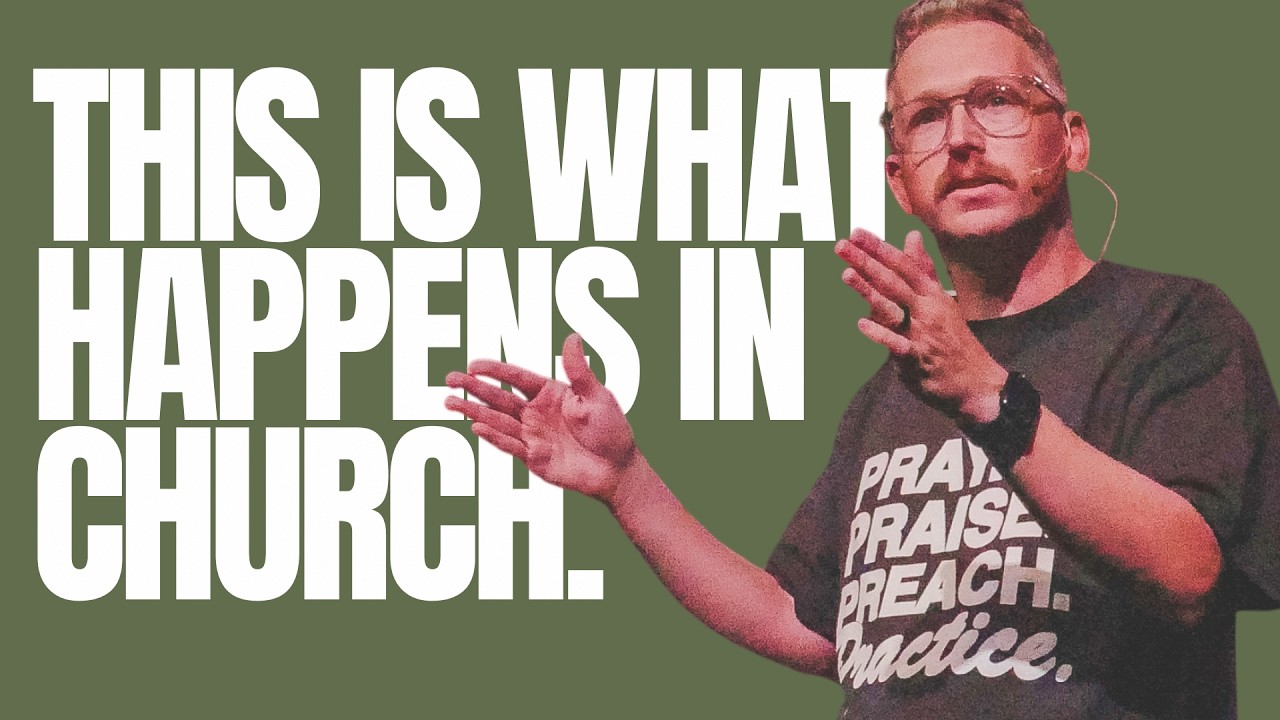
· You probably could fill in the rest of your blanks cuz we say it a lot and I might be wearing a shirt that even says it on here. All right, but our next thing is we need to praise through God's word. Praise through God's word. Look at the last half or the last piece I should say of verse 16. Uh uh picking up at through. He says, "How how do we have this worship?" And what is part of it is we do it through psalms, through hymns, and spiritual songs, singing to God with gratitude in your heart.
· I love what Paul does here. He gives us three words for music and how it should be in our service, in our church gathering. He uses psalms, hymns, and spiritual songs. I love that cuz Paul didn't say, "Hey, here is a holy hymnbook that was copyrighted in 1945.
· It has been passed down to you. Now make sure no songs are sang outside of that himnil." He didn't say, "Hey, Caleb has been blessed by the Lord. Only sing a song if it's on Caleb. Hey, I gave you this Spotify playlist. It is full of all worship bangers. Only sing these songs." Instead, Paul said, "Psalms, hymns, and spiritual songs."
· I love this cuz Paul is settling an argument that the church has had for thousands of years of what songs do we sing, what songs do we sing that that we want to hear. But look at what he is doing in this. He's never saying what he's never giving the question of what kind of music we sing. He's saying there's going to be lots of different kinds of music, but the question is what is in the music?
· Does the song carry the word of Christ or does it just carry a feeling, a feeling of nostalgia, a feeling of happiness, a feeling of movement in our heart? Or is it carrying the word of God? Cuz look at what singing is doing in this verse. It is the means before this, and we'll break this down more. It is one means of teaching and admonishing one another.
· That means music is not the warm-up act before the teaching. If it was at cross church, you guys need to be so much more awake before I teach and actually be happy and like Saturday and like laugh at my jokes and uh look like you're not about to fall asleep. But the singing is not the warm-up. The singing is part of the teaching. And here's the problem. I think most churches treat the music as a formality.
· When Paul says, "This is formative for what we know about God. You are being shaped by what you sing, whether you mean it to shape you or not."
· And here's my favorite proof of that from history. Around AD112, there's a Roman governor named Plenny who was arresting and executing Christians in what is now modern-day Turkey. and he wrote to the emperor Caesar at this time cuz he could not figure out what these people were actually guilty of, but he was told that they were doing something.
· So he started to interrogate them. And as he's interrogating, he he wrote down what they did when they gathered. And it's the oldest description of a Christian worship service written by an outsider. And out of everything he could have written down, any guesses what he put in that letter, he says they got it before dawn and they sang to Christ as if he were God.
· It's like these crazy people were singing to Jesus, the dude we killed on a cross, saying he was God. That was it. That was the crime under Rome at the cost of their lives of declaring Jesus as Lord instead of Caesar. They were singing it with joy and gratitude in their hearts. You see in the American church, I think we have made worship something it is not.
· And our goal here at Cross Church is not to fall into that trap. Our goal is not to have the best sound because someone will complain about whatever sound is coming out of whatever speakers at whatever time. Our goal is not to to sing songs that are on the radio or the Spotify playlist or exclusively out of hymns. Our goal is not to meet your preferences.
· Cuz here's the problem. Your preferences are probably different than the preferences of the people around you. Your preferences are different than my preferences. I shared with you a couple weeks ago my preferences of music. If we had my preferences, we would make a pit in the middle of this room. All right, there's five of you that are excited about that. The rest are like, I'm finding a new church right now.
· But here's the deal. When it comes to worship and singing songs, our goal is to sing songs that reinforce the theology of scripture and help God's word take further root in your life.
· Church, what you sing on a Sunday is not entertainment. It is you loading truth into your heart in a place in your soul that the world will not get. And look at where Paul lands on this. I love it so much in verse at the end of verse 16 where he says, "You sing these songs, these psalms, these hymns and spiritual songs, singing to God with gratitude in your hearts."
· Some of you that should encourage because some of the times I'm going to tell you, you don't look happy when you sing. All right. You're like singing through gritted teeth and crossed arms, but I hope there's gratitude deep inside there. All right. And and here's the the trick of it. No one looks happy when they sing. I intentionally smile when I sing just so that my heart matches the outside of my face cuz I can be so happy on the inside and then I just look like angry on the outside. So I like smile.
· Um and I sound terrible when I sing anyway. So it doesn't matter what actually comes out as long as there's a smile on my face and gratitude in my heart.
· But he's saying, "You sing these songs not for a feeling, not to be moved, not to make sure that everything feels right in the moment, but we sing with gratitude in our heart, knowing we're reinforcing theology of scripture so that it can illuminate God's word and it can change our lives."
· And here's the encouragement is sometimes you might walk into this room broken and beaten down and you're going to sing a song and be like you're saying God is good but my life is so bad and such a wreck and we're singing how he has done great things but there is nothing great about my life right now.
· But when we sing through that heartache, maybe those gritted teeth, we are reinforcing the truths of scripture of how good our God is. A Christ-c centered service happens when we pray through God's word, when we praise through God's word, but when we also preach through God's word. Spoiler alert, this might be my favorite. All right. Uh look at the middle of verse 16. as he's talking about this and he's talking about the word of Christ dwelling richly among you. He uses this phrase in all wisdom, teaching and admonishing one another.
· Now, I want you to notice something that probably ought to make every one of us a little uncomfortable is Paul does not say, "Let the pastor teach you exclusively." Instead, in this verse, when he's describing as they're coming together as a church family, he says, "Let one another."
· Now, let's break down what that teaching and admonishing teaching is the word didco. It is where we get the Greek word from for didactic. And didactic teachings mean handing someone content and saying, "This is true. This is factual." So, when we're teaching the word of God, we're saying this is what the word of God says. This is truth. But then he uses this word admonishing. And admonishing is a little different.
· Admonishing is to put sense into somebody's mind. Man, I wish we could all get better at that. Right? You wish you could put sense into your kid's mind. Sense into your husband's mind. Good luck with that. It's impossible. Right? It's like we want to put sense into somebody. That's that admonishing word. It is the word for having a hard conversation.
· the warning, the friend who loves you enough to say the thing that nobody else will say. Now I want to make a comment here that when we talk about why the why we teach and admonish this is why we are so passionate here at cross church about preaching expositionally word by word verse by verse Christ centered
· Christc centered sermons meaning everything that we have it should all point to Jesus and expose him when we read the word of God verse by verse book by b book it is exposing God's word and showing showing how it points to Jesus and nobody else as our Lord and our Savior. And when we do that, here's what I love is it doesn't allow us to sidestep things we don't want to say.
· Sometimes our opinion might might differ from what God's word says and we might want to censor God, but we don't do that here at Cross Church. We don't do that because we're going to boldly preach what scripture says. If it makes you uncomfortable, it is not my fault. I'm going to blame God and you can take it up with him. But when we do this, I I love it. It changes lives, but then it continues on.
· It doesn't stay here at the pulpit. God did give us a pulpit, and we will continue to use it boldly in all of our churches at in our cross collective. But he also gave this church you and church where the only person doing any teaching or admonishing is the guy with a microphone in a church. That is a church where the word is just renting a room but is not living and rooted in its community.
· And hear me on this because the pulpit is part of my job and the part I love and the church keeps accountable. But here is where it continues to go past this is this is the starting point not the finishing because teaching admonishing one another looks like the church in action.
· It looks like the guy sitting on a curb with another dude from his Bible group encouraging him, talking to him of why he shouldn't walk away from his marriage. It's texting a verse to somebody at 6:00 a.m. to encourage them that, you know, they're just going through the ringer and just continuing to encourage them to keep going, keep trusting no matter how hard life gets.
· This looks like the seven-year-old widow talking with a 30-year-old young mom that is overwhelmed, saying, "I know this season is hard, but God loves you and God has a plan for you." Teaching, admonishing is saying the hard stuff out loud to people you love and then staying in that relationship to have that tough conversation to see how God can move.
· Paul says we are to teach and admonish, but don't skip the first three words of that phrase. He says in all wisdom, he does not teach and admonish your opinion. Because we all have opinions and we say this all the time at cross churches, you are entitled to your own opinion, but not to your own Bible. Because where our opinion contradicts with the Bible, your opinion is wrong.
· But the more that we are filled with God's word, the more that the wisdom of God's word will flow out of us. We cannot give something we do not have personally. But when we are soaking this in, letting it take root in our hearts, we can pass along that wisdom to one another as Paul calls us to.
· And church, the last thing about preaching God's word is that a sermon is not over when the preacher stops talking. A sermon is over when you and I actually obey it and let it take root in our hearts and let it push our feet forward. Which leads to the last part of this is we can take the best notes in the building. We can put them in a drawer with other 52 each week. And we can walk with the word and let it rent storage in our life. But God calls us to something else. And this leads to our last P.
· As we pray through, as we praise through, as we preach through, we do all this so that we can practice God's word. Check out verse 17 in this. He says, "And whatever you do, in word or in deed, do everything in the name of the Lord Jesus, giving thanks to God the Father through him."
· I love how Paul when he gets into this idea of practicing, he just casts such a wide and crazy net. First he says in whatever you do in word or deed, like whatever you do, that sounds like really broad. Like whatever you do, like all of it, whatever you do, whatever you do, all of it, do it in this way. But then he goes and he doubles down and then he says also do everything in the name of the Lord. So he's like, "Wait, whatever I do and do everything." Paul's like, "I'm covering my bases. No matter what you do, do through the word of Jesus Christ."
· And he leaves nothing left where we can like kind of find the loophole. Be like, "Well, do I have to follow Jesus in this area of my life?" Like I don't think you covered that, Paul. He's like, "No, everything whatever where anything in between it do it how God would have you do." and watch where it lands because verse 18 is not an accident in this is I
· encourage you to keep reading maybe this week through the rest of chapter 3 but in verse 18 he starts talking and he applies this to wives and husbands and children and the people you work with he said hey go practice God's word everywhere in everything wherever you go and here's what we need to hear is Sunday does not end in the parking lot Sunday ends in your kitchen, on your job site, in a text that you send on Tuesday night. And notice the standard he sets.
· He doesn't say do everything perfectly cuz none of us can do that. He doesn't say do everything successfully cuz we can't. Instead, he says do everything in the name of the Lord Jesus.
· Which means as we practice our faith from Monday through Saturday, it's never asking the question, was I impressive?
· Was I successful?
· But whose name did I do it in?
· In the 1600s, there was a French soldier named Nicholas Herman. He got wounded in the war. He limped out of the army and eventually he joined a monastery in Paris as a lay brother. They gave him the name Lawrence. Don't you guys just love they just like renamed him like no longer will you be Nicholas, you will be Lawrence. Uh but they named him Lawrence. And then they assigned him to the kitchen. And for about 30 years, he served faithfully washing pots and pans.
· And get this, he didn't like doing it. He didn't like the pots and pans. He even admits in his diary, he's like he he didn't have a passion for washing dishes.
· But people started coming to that monastery and year after year of just this guy faithfully serving in this area and talking about how he got to serve Christ in his name. Year after year people would go to that monastery. They would work walk past the priests and the scholars to talk to the man doing dishes.
· because somewhere in those 30 years of pots and pans being washed, he figured out that God was just as present at the sink as he was in the chapel. And you see the they they wrote his letters down after he died. And we still read them today all about a man in the kitchen. And what we need to hear from this is worship is not done in one hour.
· This is a worship service that we start off, but worship continues and is done throughout our week. And don't miss the last line of this verse. As Paul is building this, as he is showing us how we do this whole worship thing, as we pray through scripture, as we praise through scripture, as we preach through scripture, as we attempt to practice scripture, he continues in verse 17 and he says all this, we are giving thanks to God the Father. I love these two words, through him.
· through him is through Jesus Christ.
· Because Paul is saying through him, through the God man Jesus is what all of this scripture points to. Through him being Jesus, he came down and God made himself known in flesh and bone because we couldn't stop sinning because we couldn't stop messing up and he came to make himself known through him in Jesus Christ. As Jesus lived a life, it was through him that the prophets in the law was fulfilled. It was not abolished.
· It was fulfilled in him because he lived it perfectly out. Every stroke, every letter that was ever written through him, he took on our baggage. He went to the cross in our place. He died a death that we deserve. Through him in his blood, our sins were covered. through him in his power as he raised from the grave. All of a sudden, no, no longer are we marked as a sinner and as a scum and as someone who is so far from Christ.
· Instead, we can be welcomed in as a child of God. And through him, the person of Jesus Christ, we can have eternal life with God and the new heaven and the new earth for all of eternity. This is only possible through him, the God man in Jesus Christ.
· And you see the reason we gather together as a church is to make much of Jesus. Not to make much of anything else. Not to make much of ourselves. Not to make much of our culture. Not to make much of the stuff of our world. But to make much of the God that we worship.
· And you see when we have this worship service that points to him, when we are rooted in worship in our lives, I think this whole passage points to this rooted truth that Paul is trying to drill into our heads is we will never be ready for God's work. If we are not first rooted in our worship of him, God has big plans for your life.
· plans for you to be a better father, a mother, to be a better husband and wife, a better boss, a better worker, a better brother, and a better sister. He has plans for how you can know him more deeply and how you can make him known to the world around him. But none of that will ever happen if your life first isn't rooted in a worship that you acknowledge him as God and you revolve everything else around giving him glory.
· So how does your church help you do that?
· And today, honestly, as we go through this whole thing of unpacking what a first century worship service probably looked like under Paul's guidance and encouragement is how does Cross Church begin to equip you and love you to help make this happen. As you walked in, you got this little bulletin handout that looks a little bit different today. Normally you might scribble some things when you're bored on here or put your gum in it and maybe throw it away when you are done.
· But we changed it up a little bit this week and this has been a project that our staff has been working on for quite a bit of time. We've been leaking these words of pray and praise and preach and practice really for the past year and we've been doing this the past decade here at Cross Church. But we're going to systematically put some language to it.
· [music] But here's what I am promising to you as your pastor here at Cross Church Surprise [music] is that when you come to gather as the church to come into a worship service, [music] we are going to have a Christc centered service going through God's word doing exactly these things.
· We're going to pray through scripture corporately [music] together. We're going to call out. We're going to cry. We're going to use God's words to [music] speak back to him and see how it changes what's in our heart. We're going to praise through scripture.
· Maybe not the songs you heard this week on Caleb. Maybe not the playlist that's there. Maybe not the hymn that might be at your house that you probably stole from a church if you own a hymn.
· But we're going to sing songs that illuminate the theology. I love how we put in here why we sing it. We don't sing songs randomly. We don't sing songs on our preferences. We sing it because it illuminates the text and reinforces the theology of God's word and what we're studying.
· [music] We're going to preach it boldly, unashamedly, verse by verse, book by book, and see how it changes our lives and changes the community around us. And church, this is where you come in is you are going to help us practice it. [music] Not to say that's enough. I got my church filled. Now I can feel good about watching football the rest of the day. But I'm actually going to walk out these doors.
· I'm going to apply God's word. I'm going to live out my faith. And I'm going to show the world around me how Jesus is greater than everything else. So here's what you get to do to try to practice it this [music] week.
· Is this is what you know you'll expect every Sunday. that as you come in here, you will have a Christ-c centered service where people will encounter Jesus through his word that has been named known to us. [music] Before you leave, I want you to think about and I want you to send a text of who needs to be in a chair sitting next to you next week, [music] who needs to encounter the Jesus of this Bible.
· And when they counter him in their worship, [music] man, it's going to change their community. It's going to change their disciplehip, how what they prioritize. It's going to make them ready for a mission and a leadership that they don't even know yet, but that God has a plan for their life [music] that is so much greater than what our world has to offer.
· Who are you going to text before you leave this parking lot of who needs to sit next to you [music] and experience the Jesus Christ of the Bible, the savior of the universe who has changed your life [music] and who can change everyone's life in our community around us. [music] Church, let us know him and let us make Jesus known to our community. [music]
Part of Series

Rooted and Ready
View all episodesTranscript
· He said, "Hey, go practice God's word everywhere, in everything, wherever you go." Here's what we need to hear. Sunday does not end in the parking lot. Sunday ends in your kitchen, on your job site, in a text that you send on Tuesday night. And notice the standard he sets.
· He doesn't [music] say, "Do everything perfectly cuz none of us can do that."
· He doesn't say, "Do everything successfully cuz we can't." Instead, he says, "Do everything in the name of the Lord Jesus." Which means as we practice our faith from Monday through Saturday, it's never asking the question, was I impressive? Was I successful? But whose name did I do it in?
· I guess. But [music] uh today is exciting cuz we're starting a brand new series. And as we get into that, I have a question for you for and I'm going to give you some specifications. How many of you grew up in the greater Phoenix metropolitan area? All right.
· Yep.
· 10 of us. That's all right. That's actually about five more than I expected. Um, and I I I'm in that train as well. But most of you are not from here. In first service, same thing happens. And week after week, you know, as I drive our city, most of you are from somewhere else. You know what it's like to come down the coast and take your life, pack it up, and come to the sunny 115°ree weather of Arizona. You know what it's like to leave the Midwest and trade humidity for a dry heat?
· Doesn't feel dry when it's 120, right?
· But you maybe packed up your life and you know the difference between living in maybe a temporary place, an Airbnb or a hotel and living out of a suitcase and then somewhere where actually is your home where you're planting roots, where you're painting walls, where you're doing projects that your wife has given you. And then when you think that project's done and there's no more project, more projects keep popping up.
· But today we're going to see that not only is being rooted in a home, in a valley, in a place so different than living somewhere temporarily, it's not much different than in our spiritual life when it comes to church. As we start this new series rooted in ready, we're going to talk about the difference between just merely attending a church, just renting a seat, and honestly, you're not really renting that seat.
· You're probably using that seat for free as you come and go and actually planting your roots into a community into a body of people that changes everything. Over the next five weeks through the letter to the Colossians, we're going to parse through this text and we're going to talk about how do we be rooted in God's word and ready to make Jesus known what he calls us to do to the world around us. And right up front, I'm going to actually share with you our map.
· The next five weeks, this rooted and ready progression of where we're going today.
· We are starting is we can't go anywhere before we start with being rooted in worship. If we don't know that Jesus Christ is our Lord and Savior as the text will expose today. If we don't know he is God, then there is nowhere else to move forward to in church and in this whole following Jesus thing. It starts with rooting our worship in him. But it continues as then we are rooted in community. That is what a church family is about is gathering together with believers of different who from come from different places in our lives.
· But when we come together we have this uniting factor of Christ and all of a sudden we begin to do life together begin to love together and do this whole thing side by side. Then we move to being rooted in disciplehip. that we don't just stay where we are, but this process of getting closer and closer to Christ, of weeding out the things in our lives we do not like so we can be more like our Lord and Savior. And here's what I love. These three roots we put in the ground, it leads to two fruits.
· You like that little word play? That's all me, not AI, I promise. But this rooted in this worship and community and disciplehip, it gets us ready. Ready for mission both locally and globally to go out and to make Jesus known, but also ready for leadership to lead our families, our workplaces, our kids, and those around us. You see, all this starts today in Colossians 3, looking at verse 16.
· And as we dive into this text, here is this question as we begin to say how how do we be rooted in God's word to be ready for what he has and how do we be start this to be rooted in worship.
· The question for us becomes is how we do this at a church level is we must have a service that is Christ centered. And really the question that comes over this text is how do we have a Christc centered worship service? Here's what I mean by that is when we come to church, what distinguishes church from everything else that should is this book I'm holding, the word of God, the Bible, the holy scriptures, the inspired word of God.
· If we didn't have this book, then we would be gathering together as a social club. And this is the worst social club that you will ever go to, right? We don't drink. We don't party too much. Except we did have bounce houses all summer when it was 120 out.
· Uh we don't have the fun aspects of a social club. But all of a sudden, when this book comes, when we read this book, when it calls us to change our life, when all of a sudden something in our heart gets convicted because the Holy Spirit is working with the words that are read out of this page, everything changes.
· So Paul today is going to describe for us a worship service that is centered around this book that is centered around the God man Jesus Christ.
· And when we read this book, we're not just reading it to pick topics that we like, but we read this book by book, verse by verse, saying, how do we expose ourselves to the word of God that can change our lives and change our community? And it starts here in verse 16 as Paul reads, "Let the word of Christ, this book we hold in our hands.
· Let the word of Christ dwell richly among you in all wisdom and teaching and admonishing one another through psalms and hymns and spiritual songs, singing to God with gratitude in your hearts. In whatever you do in word or in deed, do everything in the name of the Lord Jesus, giving thanks to God the Father through him.
· Let's pray over his word in our preaching today. Dear Lord, I thank you, God, I thank you that you are so good, Lord, that you has given us your word, God. Your word that changes everything about our lives. Your word that makes you known to us. your word that tells us who Jesus is and how we follow him.
· Lord, move in this place, God. Move in our hearts. Convict us where we need to be convicted. Encourage us where we need to be encouraged. And Lord, move our feet, God, to be on mission for you as a result. Lord, we love you. We thank you. And lift all this up in Jesus name.
· Amen.
· We start this series, as we said, looking at being rooted in worship because Paul here is describing a worship service. And and church, what I love here is look at what he describes.
· It is not a mood or as the kids say, a vibe, right? Yeah, it's a vibe. Um, some of you have vibes. Some of you have moods. I sometimes have a grumpy mood because, you know, I'm always tired and have a lot of kids and I don't try not to turn into a grumpy old man, but I kind of am a grumpy old man at times, right? But he's not describing a mood.
· He's not even describing a music style.
· He's not describing a building. Instead, Paul here is describing a service that points to that revolves around and everything builds on the person of Jesus Christ. And as he continues on this, we ask this question, what does a Christc centered worship service looks like?
· Well, here's where it starts. And the first thing we see that just leaps off the page is that we pray through God's word. We pray through God's word. Check out verse 16 at the start of this. It says, "Let the word of Christ dwell richly among you."
· As Paul starts this, he starts it with a verb and he uses this verb of dwell. The Greek word here is ano. It is built out of the word house which is oos and it means to move in to take up residence.
· Means like pack up the truck and go be at home in that place. They didn't have trucks 2,000 years ago but they packed up something and moved. Right? In this verb dwell, it means that Paul is asking us that we don't let the word of God just visit our life. Instead, we let the word of God, we give the deed over to Christ and say, "Hey, move in and change everything about me." And then, look at this. He add he has an adverb to it. Um, I don't know if you know what an adverb is. It's probably been a long time since you've been in school.
· Uh, my kids come to me like, "Can you help me with your homework or my homework?" And I start reading it. I'm like, "What is this?"
· like I don't know any of these things. Like how I'm working on my doctorate and I can't do fourth grade homework. All right. I don't know what's happening there. But here an adverb it's adding to the verb. I don't know if that's how you teach it or not but that's what it is.
· But the word he uses is richly. The word is plasos which is actually the root word behind our English word of pure which is extravagant or lavish. What Paul is describing here is to dwell richly means it is full. It is lavish.
· It has everything. This is not an empty kitchen and pantry with bare bones. It's a pantry, a kitchen that is overflowing into our lives. Yesterday, my wife and I uh we went to the gym. She dragged me and then I decided to work out and my legs don't work as well today. I don't know what that's about. But as we're leaving, I'm like, "You want to go to Costco?" Me, her, all four kids. She's like, "It's Saturday." I'm like, "If we say together, we can do this." All right. And we did it and it was successful. Our pantry is stocked full.
· It is lavish. The fridge is full. A day and a half, those kids will eat all the food and we'll have nothing again. But Paul is describing here to dwell richly, to be lavish, to be full with the word. But then I love how it's translated. The CSB I'm reading out of today says it this way, to dwell richly among you.
· He uses this plural phrase, and this is not a command for your quiet time. This is a command for the gathered church. You see, Paul, he's actually speaking to the church at Colasse in first century Rome. And in that time, they didn't have their own rooms in separation. They usually lived in like a big house with like big rooms. And then they also couldn't read. They were not literate.
· most of them. And on top of that, if they were literate, they usually didn't have scrolls that they had on their own.
· That was take a month's wage to buy a scroll because you had to actually have a guy write it out by hand. So most of these people, they didn't have access to the word of God in their house in their quiet time that they could just pull up and read. They heard the word of God when they gathered together, when they came to came to as a gathered church. So when Paul says let it dwell among you, he's saying when you gather together as a church.
· So this question comes, how do we have a service that is pointing to Jesus? It starts the way every cross church service starts before we sing a note. Before I we say a word from God's word is we pray. Now, you might be wondering, you're like, "Well, I I came to service today."
· And maybe if you were one of the 10 people that were here before the music starts at service, all right? Usually, you know, everyone walks in about 5 to 10 minutes late, but we actually start our service with music. And usually it's an upbeat song so that we know you're alive and have a pulse and try to get something going right there. But you're like, "You didn't start with prayer, you started with a song." But actually, every Thursday, and we're about to start this every Wednesday uh morning, um starting in September, we have our prayer group that meets in this building at 6:00 a.m. where we pray over that weekend.
· But even now, every single week, all year long, we do something we call the Sunday setup. Thursdays at 2:00. It's awesome cuz five people watch it live with me while I watch it. But here's what we do in the Sunday setup, and this is on all of our socials, our YouTube and Facebook, is we take the piece of scripture that we're going to be preaching through, and we read it and we give prayer prompts so we can prepare our hearts for what God is doing. We're asking God, God, let your word dwell richly in my life. Let it land on me.
· Let it be there. Let it start moving in there. because we know that without God's prayer that none of this matters.
· And maybe you're thinking, you're like, "Hey, I like that idea, but I'm a bad prayer." A lot of people like, "I I can't pray good." And that's all of us, to be honest. You You pray about four lines, you're like, "And I'm out of content." But here's what we don't realize is we have a whole book of content right in front of us. is when we pray the psalms, when we pray the words of God back to him, he is telling us what our prayers should look like, how they should shape us. When we pray things like Psalm 23, that the Lord is my shepherd, I have what I need.
· That we are praying back to God what we are struggling with, but what we know he meets us in. And you see, about four to five years ago here at Cross Church, we made the leap of saying, "Hey, we're going to corporately pray in our services." And I'll be honest, sometimes it's super uncomfortable when there's people praying next to you. Sometimes we just yell out like we did this morning.
· Sometimes we ask that you get together with strangers around you and you're like, "Please, nobody make eye contact with me. I don't want to pray with you." But when we pray as a church family, the word of God, it begins this process of the word dwelling richly among us as a church family. And Paul says it plainly later in this uh same letter as he says this is this his leaking his precursor.
· He's saying devote yourself to prayer is it starts here. And here's what's so awesome. The more we corporately pray it will spill out into your personal prayer life. And you will pray more throughout the week. You see we have a Christc centered service. A service that revolves around Jesus. A service that makes Jesus known in an incredible way when we pray through the word of God. And you might know where this is going.
· You probably could fill in the rest of your blanks cuz we say it a lot and I might be wearing a shirt that even says it on here. All right, but our next thing is we need to praise through God's word. Praise through God's word. Look at the last half or the last piece I should say of verse 16. Uh uh picking up at through. He says, "How how do we have this worship?" And what is part of it is we do it through psalms, through hymns, and spiritual songs, singing to God with gratitude in your heart.
· I love what Paul does here. He gives us three words for music and how it should be in our service, in our church gathering. He uses psalms, hymns, and spiritual songs. I love that cuz Paul didn't say, "Hey, here is a holy hymnbook that was copyrighted in 1945.
· It has been passed down to you. Now make sure no songs are sang outside of that himnil." He didn't say, "Hey, Caleb has been blessed by the Lord. Only sing a song if it's on Caleb. Hey, I gave you this Spotify playlist. It is full of all worship bangers. Only sing these songs." Instead, Paul said, "Psalms, hymns, and spiritual songs."
· I love this cuz Paul is settling an argument that the church has had for thousands of years of what songs do we sing, what songs do we sing that that we want to hear. But look at what he is doing in this. He's never saying what he's never giving the question of what kind of music we sing. He's saying there's going to be lots of different kinds of music, but the question is what is in the music?
· Does the song carry the word of Christ or does it just carry a feeling, a feeling of nostalgia, a feeling of happiness, a feeling of movement in our heart? Or is it carrying the word of God? Cuz look at what singing is doing in this verse. It is the means before this, and we'll break this down more. It is one means of teaching and admonishing one another.
· That means music is not the warm-up act before the teaching. If it was at cross church, you guys need to be so much more awake before I teach and actually be happy and like Saturday and like laugh at my jokes and uh look like you're not about to fall asleep. But the singing is not the warm-up. The singing is part of the teaching. And here's the problem. I think most churches treat the music as a formality.
· When Paul says, "This is formative for what we know about God. You are being shaped by what you sing, whether you mean it to shape you or not."
· And here's my favorite proof of that from history. Around AD112, there's a Roman governor named Plenny who was arresting and executing Christians in what is now modern-day Turkey. and he wrote to the emperor Caesar at this time cuz he could not figure out what these people were actually guilty of, but he was told that they were doing something.
· So he started to interrogate them. And as he's interrogating, he he wrote down what they did when they gathered. And it's the oldest description of a Christian worship service written by an outsider. And out of everything he could have written down, any guesses what he put in that letter, he says they got it before dawn and they sang to Christ as if he were God.
· It's like these crazy people were singing to Jesus, the dude we killed on a cross, saying he was God. That was it. That was the crime under Rome at the cost of their lives of declaring Jesus as Lord instead of Caesar. They were singing it with joy and gratitude in their hearts. You see in the American church, I think we have made worship something it is not.
· And our goal here at Cross Church is not to fall into that trap. Our goal is not to have the best sound because someone will complain about whatever sound is coming out of whatever speakers at whatever time. Our goal is not to to sing songs that are on the radio or the Spotify playlist or exclusively out of hymns. Our goal is not to meet your preferences.
· Cuz here's the problem. Your preferences are probably different than the preferences of the people around you. Your preferences are different than my preferences. I shared with you a couple weeks ago my preferences of music. If we had my preferences, we would make a pit in the middle of this room. All right, there's five of you that are excited about that. The rest are like, I'm finding a new church right now.
· But here's the deal. When it comes to worship and singing songs, our goal is to sing songs that reinforce the theology of scripture and help God's word take further root in your life.
· Church, what you sing on a Sunday is not entertainment. It is you loading truth into your heart in a place in your soul that the world will not get. And look at where Paul lands on this. I love it so much in verse at the end of verse 16 where he says, "You sing these songs, these psalms, these hymns and spiritual songs, singing to God with gratitude in your hearts."
· Some of you that should encourage because some of the times I'm going to tell you, you don't look happy when you sing. All right. You're like singing through gritted teeth and crossed arms, but I hope there's gratitude deep inside there. All right. And and here's the the trick of it. No one looks happy when they sing. I intentionally smile when I sing just so that my heart matches the outside of my face cuz I can be so happy on the inside and then I just look like angry on the outside. So I like smile.
· Um and I sound terrible when I sing anyway. So it doesn't matter what actually comes out as long as there's a smile on my face and gratitude in my heart.
· But he's saying, "You sing these songs not for a feeling, not to be moved, not to make sure that everything feels right in the moment, but we sing with gratitude in our heart, knowing we're reinforcing theology of scripture so that it can illuminate God's word and it can change our lives."
· And here's the encouragement is sometimes you might walk into this room broken and beaten down and you're going to sing a song and be like you're saying God is good but my life is so bad and such a wreck and we're singing how he has done great things but there is nothing great about my life right now.
· But when we sing through that heartache, maybe those gritted teeth, we are reinforcing the truths of scripture of how good our God is. A Christ-c centered service happens when we pray through God's word, when we praise through God's word, but when we also preach through God's word. Spoiler alert, this might be my favorite. All right. Uh look at the middle of verse 16. as he's talking about this and he's talking about the word of Christ dwelling richly among you. He uses this phrase in all wisdom, teaching and admonishing one another.
· Now, I want you to notice something that probably ought to make every one of us a little uncomfortable is Paul does not say, "Let the pastor teach you exclusively." Instead, in this verse, when he's describing as they're coming together as a church family, he says, "Let one another."
· Now, let's break down what that teaching and admonishing teaching is the word didco. It is where we get the Greek word from for didactic. And didactic teachings mean handing someone content and saying, "This is true. This is factual." So, when we're teaching the word of God, we're saying this is what the word of God says. This is truth. But then he uses this word admonishing. And admonishing is a little different.
· Admonishing is to put sense into somebody's mind. Man, I wish we could all get better at that. Right? You wish you could put sense into your kid's mind. Sense into your husband's mind. Good luck with that. It's impossible. Right? It's like we want to put sense into somebody. That's that admonishing word. It is the word for having a hard conversation.
· the warning, the friend who loves you enough to say the thing that nobody else will say. Now I want to make a comment here that when we talk about why the why we teach and admonish this is why we are so passionate here at cross church about preaching expositionally word by word verse by verse Christ centered
· Christc centered sermons meaning everything that we have it should all point to Jesus and expose him when we read the word of God verse by verse book by b book it is exposing God's word and showing showing how it points to Jesus and nobody else as our Lord and our Savior. And when we do that, here's what I love is it doesn't allow us to sidestep things we don't want to say.
· Sometimes our opinion might might differ from what God's word says and we might want to censor God, but we don't do that here at Cross Church. We don't do that because we're going to boldly preach what scripture says. If it makes you uncomfortable, it is not my fault. I'm going to blame God and you can take it up with him. But when we do this, I I love it. It changes lives, but then it continues on.
· It doesn't stay here at the pulpit. God did give us a pulpit, and we will continue to use it boldly in all of our churches at in our cross collective. But he also gave this church you and church where the only person doing any teaching or admonishing is the guy with a microphone in a church. That is a church where the word is just renting a room but is not living and rooted in its community.
· And hear me on this because the pulpit is part of my job and the part I love and the church keeps accountable. But here is where it continues to go past this is this is the starting point not the finishing because teaching admonishing one another looks like the church in action.
· It looks like the guy sitting on a curb with another dude from his Bible group encouraging him, talking to him of why he shouldn't walk away from his marriage. It's texting a verse to somebody at 6:00 a.m. to encourage them that, you know, they're just going through the ringer and just continuing to encourage them to keep going, keep trusting no matter how hard life gets.
· This looks like the seven-year-old widow talking with a 30-year-old young mom that is overwhelmed, saying, "I know this season is hard, but God loves you and God has a plan for you." Teaching, admonishing is saying the hard stuff out loud to people you love and then staying in that relationship to have that tough conversation to see how God can move.
· Paul says we are to teach and admonish, but don't skip the first three words of that phrase. He says in all wisdom, he does not teach and admonish your opinion. Because we all have opinions and we say this all the time at cross churches, you are entitled to your own opinion, but not to your own Bible. Because where our opinion contradicts with the Bible, your opinion is wrong.
· But the more that we are filled with God's word, the more that the wisdom of God's word will flow out of us. We cannot give something we do not have personally. But when we are soaking this in, letting it take root in our hearts, we can pass along that wisdom to one another as Paul calls us to.
· And church, the last thing about preaching God's word is that a sermon is not over when the preacher stops talking. A sermon is over when you and I actually obey it and let it take root in our hearts and let it push our feet forward. Which leads to the last part of this is we can take the best notes in the building. We can put them in a drawer with other 52 each week. And we can walk with the word and let it rent storage in our life. But God calls us to something else. And this leads to our last P.
· As we pray through, as we praise through, as we preach through, we do all this so that we can practice God's word. Check out verse 17 in this. He says, "And whatever you do, in word or in deed, do everything in the name of the Lord Jesus, giving thanks to God the Father through him."
· I love how Paul when he gets into this idea of practicing, he just casts such a wide and crazy net. First he says in whatever you do in word or deed, like whatever you do, that sounds like really broad. Like whatever you do, like all of it, whatever you do, whatever you do, all of it, do it in this way. But then he goes and he doubles down and then he says also do everything in the name of the Lord. So he's like, "Wait, whatever I do and do everything." Paul's like, "I'm covering my bases. No matter what you do, do through the word of Jesus Christ."
· And he leaves nothing left where we can like kind of find the loophole. Be like, "Well, do I have to follow Jesus in this area of my life?" Like I don't think you covered that, Paul. He's like, "No, everything whatever where anything in between it do it how God would have you do." and watch where it lands because verse 18 is not an accident in this is I
· encourage you to keep reading maybe this week through the rest of chapter 3 but in verse 18 he starts talking and he applies this to wives and husbands and children and the people you work with he said hey go practice God's word everywhere in everything wherever you go and here's what we need to hear is Sunday does not end in the parking lot Sunday ends in your kitchen, on your job site, in a text that you send on Tuesday night. And notice the standard he sets.
· He doesn't say do everything perfectly cuz none of us can do that. He doesn't say do everything successfully cuz we can't. Instead, he says do everything in the name of the Lord Jesus.
· Which means as we practice our faith from Monday through Saturday, it's never asking the question, was I impressive?
· Was I successful?
· But whose name did I do it in?
· In the 1600s, there was a French soldier named Nicholas Herman. He got wounded in the war. He limped out of the army and eventually he joined a monastery in Paris as a lay brother. They gave him the name Lawrence. Don't you guys just love they just like renamed him like no longer will you be Nicholas, you will be Lawrence. Uh but they named him Lawrence. And then they assigned him to the kitchen. And for about 30 years, he served faithfully washing pots and pans.
· And get this, he didn't like doing it. He didn't like the pots and pans. He even admits in his diary, he's like he he didn't have a passion for washing dishes.
· But people started coming to that monastery and year after year of just this guy faithfully serving in this area and talking about how he got to serve Christ in his name. Year after year people would go to that monastery. They would work walk past the priests and the scholars to talk to the man doing dishes.
· because somewhere in those 30 years of pots and pans being washed, he figured out that God was just as present at the sink as he was in the chapel. And you see the they they wrote his letters down after he died. And we still read them today all about a man in the kitchen. And what we need to hear from this is worship is not done in one hour.
· This is a worship service that we start off, but worship continues and is done throughout our week. And don't miss the last line of this verse. As Paul is building this, as he is showing us how we do this whole worship thing, as we pray through scripture, as we praise through scripture, as we preach through scripture, as we attempt to practice scripture, he continues in verse 17 and he says all this, we are giving thanks to God the Father. I love these two words, through him.
· through him is through Jesus Christ.
· Because Paul is saying through him, through the God man Jesus is what all of this scripture points to. Through him being Jesus, he came down and God made himself known in flesh and bone because we couldn't stop sinning because we couldn't stop messing up and he came to make himself known through him in Jesus Christ. As Jesus lived a life, it was through him that the prophets in the law was fulfilled. It was not abolished.
· It was fulfilled in him because he lived it perfectly out. Every stroke, every letter that was ever written through him, he took on our baggage. He went to the cross in our place. He died a death that we deserve. Through him in his blood, our sins were covered. through him in his power as he raised from the grave. All of a sudden, no, no longer are we marked as a sinner and as a scum and as someone who is so far from Christ.
· Instead, we can be welcomed in as a child of God. And through him, the person of Jesus Christ, we can have eternal life with God and the new heaven and the new earth for all of eternity. This is only possible through him, the God man in Jesus Christ.
· And you see the reason we gather together as a church is to make much of Jesus. Not to make much of anything else. Not to make much of ourselves. Not to make much of our culture. Not to make much of the stuff of our world. But to make much of the God that we worship.
· And you see when we have this worship service that points to him, when we are rooted in worship in our lives, I think this whole passage points to this rooted truth that Paul is trying to drill into our heads is we will never be ready for God's work. If we are not first rooted in our worship of him, God has big plans for your life.
· plans for you to be a better father, a mother, to be a better husband and wife, a better boss, a better worker, a better brother, and a better sister. He has plans for how you can know him more deeply and how you can make him known to the world around him. But none of that will ever happen if your life first isn't rooted in a worship that you acknowledge him as God and you revolve everything else around giving him glory.
· So how does your church help you do that?
· And today, honestly, as we go through this whole thing of unpacking what a first century worship service probably looked like under Paul's guidance and encouragement is how does Cross Church begin to equip you and love you to help make this happen. As you walked in, you got this little bulletin handout that looks a little bit different today. Normally you might scribble some things when you're bored on here or put your gum in it and maybe throw it away when you are done.
· But we changed it up a little bit this week and this has been a project that our staff has been working on for quite a bit of time. We've been leaking these words of pray and praise and preach and practice really for the past year and we've been doing this the past decade here at Cross Church. But we're going to systematically put some language to it.
· [music] But here's what I am promising to you as your pastor here at Cross Church Surprise [music] is that when you come to gather as the church to come into a worship service, [music] we are going to have a Christc centered service going through God's word doing exactly these things.
· We're going to pray through scripture corporately [music] together. We're going to call out. We're going to cry. We're going to use God's words to [music] speak back to him and see how it changes what's in our heart. We're going to praise through scripture.
· Maybe not the songs you heard this week on Caleb. Maybe not the playlist that's there. Maybe not the hymn that might be at your house that you probably stole from a church if you own a hymn.
· But we're going to sing songs that illuminate the theology. I love how we put in here why we sing it. We don't sing songs randomly. We don't sing songs on our preferences. We sing it because it illuminates the text and reinforces the theology of God's word and what we're studying.
· [music] We're going to preach it boldly, unashamedly, verse by verse, book by book, and see how it changes our lives and changes the community around us. And church, this is where you come in is you are going to help us practice it. [music] Not to say that's enough. I got my church filled. Now I can feel good about watching football the rest of the day. But I'm actually going to walk out these doors.
· I'm going to apply God's word. I'm going to live out my faith. And I'm going to show the world around me how Jesus is greater than everything else. So here's what you get to do to try to practice it this [music] week.
· Is this is what you know you'll expect every Sunday. that as you come in here, you will have a Christ-c centered service where people will encounter Jesus through his word that has been named known to us. [music] Before you leave, I want you to think about and I want you to send a text of who needs to be in a chair sitting next to you next week, [music] who needs to encounter the Jesus of this Bible.
· And when they counter him in their worship, [music] man, it's going to change their community. It's going to change their disciplehip, how what they prioritize. It's going to make them ready for a mission and a leadership that they don't even know yet, but that God has a plan for their life [music] that is so much greater than what our world has to offer.
· Who are you going to text before you leave this parking lot of who needs to sit next to you [music] and experience the Jesus Christ of the Bible, the savior of the universe who has changed your life [music] and who can change everyone's life in our community around us. [music] Church, let us know him and let us make Jesus known to our community. [music]

Rooted and Ready